An Art History Major Teaching Programming, Part 2

This is part two of a three part series I’m writing on what it’s like teaching programming as a one-time art history major.  If you missed it, you can read part one here.

Part 2: Open Source is our Salon des Indépendants


Public displays of art have been essential to developing artistic communities throughout history. But at various points in history, groups such as Academies or Guilds controlled when exhibitions happened, who could show work, and what kind of work could be shown. In 19th century Paris, a group of artists organized a series of alternative exhibitions called the Salon des Indépendants that gave artists a direct outlet to the public and other artists, with no mediating Academic jury. Open source code has played a similar role in freedom of expression for programmers over the past few decades, and forms an invaluable tool for those of use who teach code.

Creating space

The original salons were periodic exhibitions curated by the French Academy. The Academy’s juries of “experts” selected the works for inclusion and rejected much of the most innovative work going on in Paris in the 1890s. In response, the Salon des Indépendants was formed in 1893 and exhibited works by the day’s avant-garde artists like Paul Gauguin, Henri de Toulouse-Lautrec, and Georges Seurat. The major break this independent Salon had with the Academy was that there was no admission jury deciding which works were selected. Open source has done the same for programming: no company, publisher, or official approval is required to exhibit one’s code to the public. The Salon des Indépendants was the birthplace of some of the early 20th century’s most influential artistic movements, and a similar explosion in creativity is happening today in open source.

Tobeen painting
A painting by Felix Elie Tobeen shown at the 1912 Salon des Indépendants

Continue reading

An Art History Major Teaching Programming, Part 1

This is the first of a three-part series about how the techniques I learned studying Art History have influenced the ways I teach Programming at UNC-Chapel Hill’s iSchool.

Part one: Code is Cultural

President Obama recently came under criticism for disparaging art history majors. He made the comment in the context of extolling the virtues of technical training for those who choose not to go to a four-year college. I took it as a challenge of sorts: to demonstrate my ‘usefulness,’ and that of my Art History degree.  I’ll note from the outset that my thoughts on this subject are heavily influenced by Paul Graham, who wrote persuasively on this topic over a decade ago. My experiences in art history, as a photographer (not a painter like Graham), and as a teacher together provide some unique insights that I’d like to share.

Studying Culture Alongside Technique

Art history taught me how to study amazing technical feats as products of more than just the hand that made them. I studied the Dutch Golden Age extensively, an era that produced some of the most intricate and technical oil paintings the world has seen. There artists were products of a culture that valued clarity and simplicity of representation. This culture not only drove their interest in producing such works, but also made it possible to make a living doing so1. The techniques these artists employed were indeed intricate, but an understanding of the wider cultural context in which they operated is essential to even begin to interpret their work.

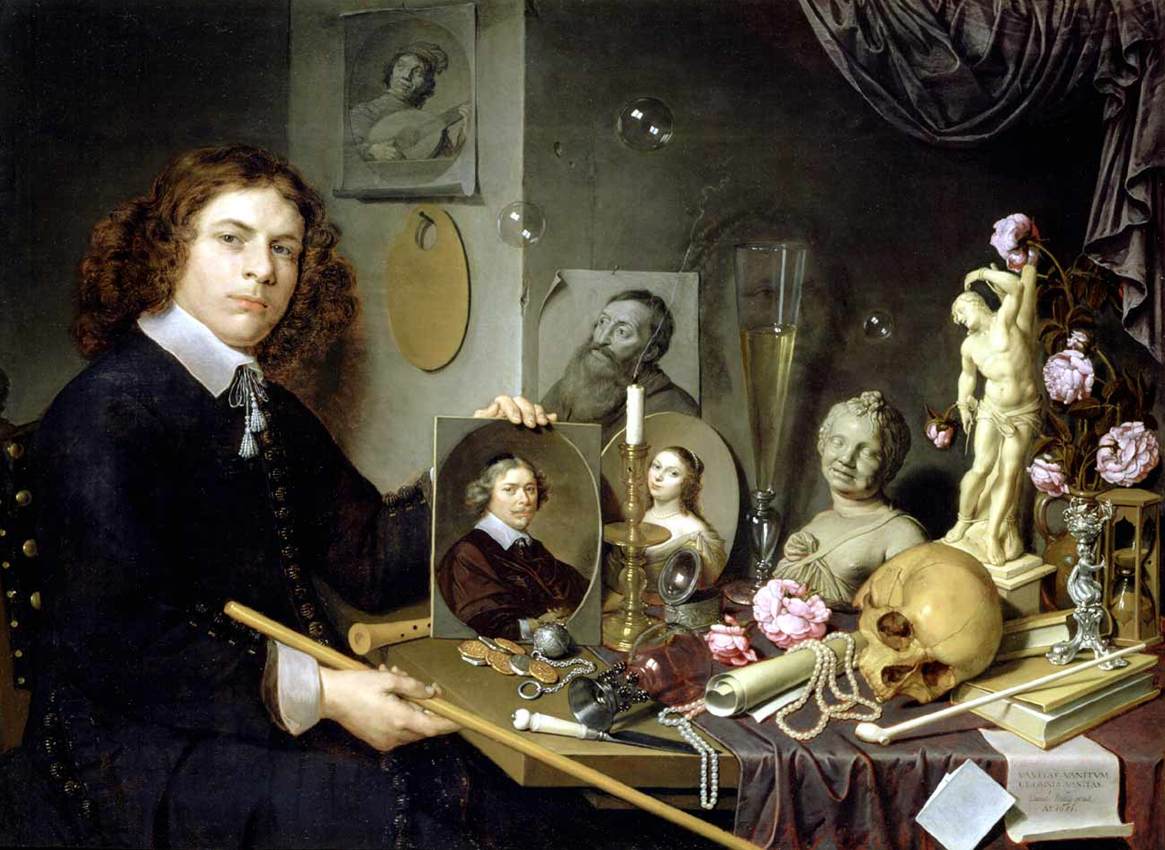
David Bailly portrait with vanitas objects
To begin to understand a painting like this, one must study both the techniques the artist used and the culture that gives meaning to the symbols he employs.
Painting by David Bailly, 1651.

Continue reading

5 Best Open Teaching Blogs

Looking for some great blogs focused on open teaching and Ed tech? Here are five of our favorites:

1. HASTAC

hastac logo

HASTAC is in some ways the embodiment of what Cathy N. Davidson, then Vice Provost for Interdisciplinary Studies at Duke University and David Theo Goldberg, (bio here), wrote in “A Manifesto for the Humanitities in the Technologoical Age” (an updated version available here). They argued that the characteristics of new, global forms of communication and online learning demand a new alliance between humanists, artists, social scientists, natural scientists and engineers all working collaboratively. Today HASTAC has grown to over 12,500 humanists, artists, social scientists, scientists and technologists working together to transform the future of learning.
Continue reading

Why Teachers Won’t Be Replaced By Software

Marc Andreesen believes that software is eating the world. It’s a very visceral image, and in one sense it’s absolutely true. Software is spreading into every industry, changing how established players must play and even what the rules of the game are. But while many in Silicon Valley and Educational Technology think that software will “eat” teachers, replacing many of them, at trinket we believe software’s role is to create openness, making teachers better and more connected. Far from there being less teachers in the future, we think openness will enable and encourage more people than ever to teach.

Continue reading